
What Is an Emergency Drench Shower and When Do You Need One?
Workplace safety in environments that involve hazardous chemicals, industrial processes, or research activities requires strict attention to emergency preparedness. One of the most critical safeguards is the emergency drench shower, a system designed to protect employees from harmful exposure by rapidly washing contaminants off the body. Understanding what an emergency drench shower is, how it works, and when it is required is essential for ensuring compliance with safety standards and for protecting the well-being of your team.
What Is an Emergency Drench Shower?
An emergency drench shower is a specially designed safety fixture that delivers a high volume of water at low pressure, enabling a worker to quickly flush harmful substances from their body. These units are activated manually, usually by pulling a lever or handle, and they deliver a continuous flow of water sufficient to thoroughly drench the user for at least 15 minutes. This rapid dilution and removal of contaminants can prevent or minimize severe injuries such as chemical burns, absorption of toxic substances through the skin, or thermal injuries caused by fire or high heat exposure.
Unlike standard showers, emergency drench showers are engineered with a specific purpose: to act as a first line of defense when an incident occurs. They are not a replacement for medical treatment but serve to stabilize the situation until professional care can be provided.
How Does an Emergency Drench Shower Work in Chemical Spill Scenarios?
When a chemical spill or splash occurs, seconds matter. An emergency drench shower provides immediate relief by saturating the entire body with water, ensuring contaminants are diluted and washed away before they can cause severe harm.
- Activation: Most showers are designed with a simple pull-rod or paddle handle that can be engaged in one motion, even with impaired vision or dexterity. Once activated, the shower begins discharging water almost instantly.
- Water Flow: ANSI standards require the shower to deliver a minimum of 20 gallons per minute (GPM) at 30 psi, which ensures that the flow is sufficient to cover the body without being so forceful that it causes additional injury.
- Duration: To effectively flush chemicals, the shower must provide a continuous water supply for at least 15 minutes. This prolonged exposure ensures that harmful substances are fully rinsed away.
- Temperature Control: Tepid water (between 60°F and 100°F) is recommended, since water that is too cold could cause hypothermia during the prolonged rinse, while excessively hot water could exacerbate injuries.
In a real-world spill scenario, a properly functioning drench shower allows workers to act immediately, drastically reducing the severity of chemical burns, inhalation risks, and long-term health consequences.
Where Are Emergency Drench Showers Typically Required?
Emergency drench showers are required in any workplace where employees could be exposed to hazardous chemicals, corrosive materials, or other dangerous substances. Specific industries and environments include:
1. Chemical Manufacturing and Processing
Facilities that handle acids, caustics, solvents, and other reactive substances are at constant risk of spills, leaks, or splashes. In these settings, showers are typically placed near mixing areas, transfer stations, and laboratories.
2. Laboratories and Research Facilities
Both academic and industrial labs frequently deal with toxic, flammable, or corrosive chemicals. Emergency showers must be installed to ensure a rapid response to accidental exposure during experiments or testing procedures.
3. Pharmaceutical and Biotechnology Operations
The manufacturing and handling of active ingredients, solvents, and process chemicals necessitate safety showers to protect employees from both acute and chronic health risks.
4. Petroleum and Gas Operations
From refineries to drilling sites, petroleum workers are exposed to hydrocarbons, high heat, and potentially explosive conditions. Drench showers are vital for flushing skin after contact with petroleum products or in response to fire-related injuries.
5. Food and Beverage Processing
Though not often considered hazardous, food manufacturing can involve strong cleaning agents, sanitizers, or additives that are dangerous upon skin or eye contact.
6. Educational Institutions
Colleges, universities, and high schools with advanced science labs are required to provide emergency showers to protect students and staff during instructional activities involving chemicals.
7. Warehouses and Transportation Hubs
Wherever hazardous materials are stored, packaged, or transported, emergency drench showers provide essential protection for workers handling drums, totes, or bulk containers.
In essence, these showers are required wherever there is a foreseeable risk of bodily exposure to hazardous or corrosive materials.
What Are the ANSI Requirements for Drench Showers?
The American National Standards Institute (ANSI), in conjunction with the International Safety Equipment Association (ISEA), sets forth detailed requirements for emergency drench showers under the ANSI/ISEA Z358.1 standard. Compliance with this standard ensures that equipment is reliable, effective, and protective in emergencies. Key requirements include:
- Performance
- The shower must deliver a minimum of 20 gallons per minute (GPM) of water at 30 psi.
- Water flow must be consistent and continuous for at least 15 minutes.
- Temperature
- Water must be tepid, defined as between 60°F and 100°F. This prevents thermal shock, hypothermia, or additional injury during the required flush time.
- Location and Accessibility
- Drench showers must be located within 10 seconds of travel from potential hazard areas.
- The pathway must be unobstructed and clearly marked with visible signage.
- Activation
- The shower must activate in one second or less.
- The control handle must remain engaged without the user needing to hold it.
- Design and Installation
- Shower heads must be positioned between 82 and 96 inches from the floor.
- The water spray pattern should have a diameter of at least 20 inches at 60 inches above the floor.
- Maintenance and Testing
- Units must be inspected weekly and tested annually for compliance.
- Regular maintenance ensures the shower is operational and delivers water of appropriate quality and flow.
Meeting these ANSI requirements is not optional; it is a regulatory and moral responsibility for employers who wish to safeguard their workforce and avoid liability.
Additional Considerations for Emergency Showers
Integration with Eyewash Stations
Many workplaces install combination units that include both an emergency drench shower and an eyewash or eye/face wash station. This provides comprehensive coverage for different types of exposures, since chemical splashes often affect both the skin and the eyes.
Heated Enclosures for Cold Climates
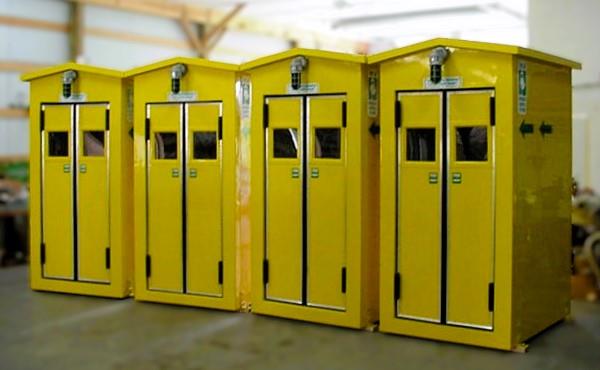
In outdoor or unheated environments, heated shower enclosures or freeze-resistant models are essential. These units ensure the system delivers tepid water even in freezing conditions, maintaining compliance with ANSI standards and preventing cold-related injury.
Custom Solutions
Some industries require specialized designs, such as showers with corrosion-resistant materials, units compatible with cleanroom standards, or compact wall-mounted versions for space-constrained facilities. Working with a supplier that can deliver custom solutions ensures that all safety requirements are met without compromising functionality.
Why Emergency Drench Showers Are Critical
In many workplace incidents, the presence of an emergency drench shower is the difference between a minor injury and a life-threatening event. Exposure to corrosive acids, alkalis, solvents, or even biological hazards can have devastating consequences if not immediately addressed. By investing in compliant and reliable safety showers, employers demonstrate their commitment to employee well-being, regulatory compliance, and operational continuity.
Partnering with B-L-S Industries, Inc. for Safety Solutions
When it comes to workplace safety, choosing the right partner for emergency equipment is just as important as the equipment itself. Since 1976, B-L-S Industries, Inc. has been committed to providing top-quality emergency drench showers, eyewash stations, and custom safety solutions. Based in Carl Junction, MO, we bring over four decades of expertise to industries across the country. Whether you need a standard eyewash station, a heated shower enclosure, or a fully customized unit tailored to your facility, we have the products and knowledge to meet your needs.
At B-L-S Industries, our mission is clear: to deliver reliable, compliant, and durable safety solutions that protect your employees in the event of an emergency. We understand that safety is not just about compliance; it is about creating a workplace where every employee can perform their duties with confidence.
Contact us today to learn more about how our emergency drench showers and eyewash stations can safeguard your team and keep your operations compliant.