
Safety Shower and Eyewash Stations: The Complete Compliance Guide
In workplaces where hazardous chemicals or materials are handled, a safety shower and eyewash station is not optional; it is essential. These units serve as the first line of defense in case of accidental exposure to harmful substances, providing workers with immediate access to drenching showers or eyewash equipment that minimizes injury and prevents long-term health consequences. With compliance governed by OSHA regulations and ANSI standards, employers have a responsibility to install, maintain, and test this equipment to ensure that it is fully functional and available in the event of an emergency.
Why Safety Showers and Eyewash Stations Matter
Hazardous materials are present in a wide range of industries, including chemical manufacturing, pharmaceuticals, laboratories, food processing, oil and gas, and metalworking. In environments where acids, caustics, solvents, or biological agents are used, the risk of accidental splashes or spills is ever-present.
A delay of just a few seconds can make the difference between a minor incident and a severe injury. Immediate access to a properly functioning safety shower or eyewash station ensures that workers can flush contaminants quickly and reduce long-term damage to skin, eyes, and respiratory systems. OSHA mandates the availability of these units for workplaces where employees are exposed to corrosive materials, while ANSI Z358.1 provides detailed performance and maintenance standards.
Types of Emergency Shower and Eyewash Equipment
Not every workplace requires the same setup, and compliance may call for different types of units depending on hazards present. The most common types include:
- Eyewash Stations: Designed to flush hazardous materials from the eyes. Available as plumbed units or self-contained portable systems.
- Face Wash Stations: Provide a higher volume of water to cover both eyes and face simultaneously.
- Drench Showers: Full-body showers designed to remove chemicals from clothing and skin.
- Combined Units: A combination of drench shower and eyewash station for maximum emergency protection.
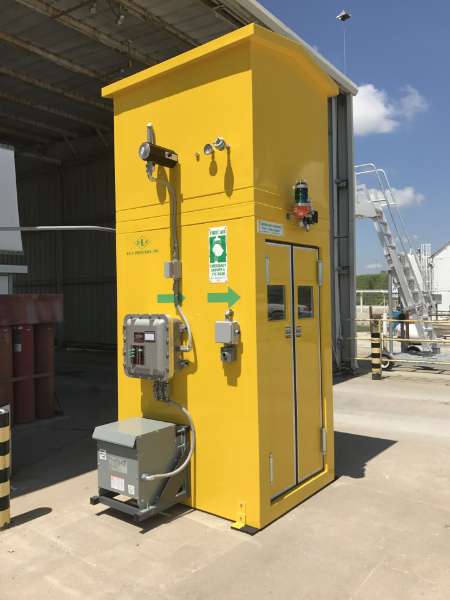
- Heated or Enclosed Showers: Essential for outdoor or cold-weather installations where freezing temperatures can hinder water flow.
Key Components of a Combined Safety Shower and Eyewash Station
A combined safety shower and eyewash station integrates full-body drenching and targeted eye or face flushing in one unit. The key components typically include:
- Overhead Shower Head: Capable of delivering a high-volume, evenly dispersed flow of water to drench the body.
- Eyewash Nozzles: Positioned to provide a gentle yet effective stream for flushing the eyes without causing further injury.
- Control Valves: Must activate in one second or less and remain open without the user needing to hold them.
- Drainage System: Proper floor drainage prevents water accumulation and reduces slip hazards.
- Protective Covers: Dust covers or caps keep eyewash nozzles clean when not in use.
- High-Visibility Signage: Clearly marked with universal safety symbols so workers can locate the unit instantly.
- Thermostatic Controls (optional): Maintain tepid water between 60–100°F as recommended by ANSI for effective flushing.
Combined units offer the advantage of protecting against both full-body and localized exposures in one location, which is particularly valuable in laboratories and chemical processing plants.
Placement Requirements: How Close Should a Safety Shower Be?
Placement of safety equipment is just as important as the equipment itself. OSHA does not specify an exact distance requirement, but ANSI Z358.1 establishes clear accessibility guidelines.
- Distance: Units must be located within 10 seconds (approximately 55 feet) of the hazardous area.
- Obstructions: Pathways must be free of barriers, doors, or obstacles that would slow down access.
- Visibility: Equipment should be in well-lit areas with clear signage.
- Same Level Access: Employees should not have to climb stairs or ladders to reach the station.
- Temperature Considerations: In cold climates, heated or insulated systems must be installed to prevent freezing.
The principle is simple: workers must be able to reach and activate a safety shower or eyewash station in less than 10 seconds after exposure to hazardous materials.
OSHA and ANSI Testing Requirements
OSHA Standards
Under OSHA’s general industry regulations (29 CFR 1910.151(c)), employers must provide “suitable facilities” for quick drenching or flushing of eyes and body where employees may be exposed to injurious corrosive materials. While OSHA sets the requirement, it references ANSI Z358.1 as the accepted consensus standard for performance, installation, and maintenance.
ANSI Z358.1 Standards
The ANSI Z358.1 standard provides detailed guidance, including:
- Weekly Activation: Eyewash and shower equipment must be activated weekly to verify proper operation and clear sediment buildup.
- Annual Inspection: A comprehensive inspection must be conducted yearly to ensure compliance with all performance criteria.
- Flow Rates:
- Drench showers must deliver a minimum of 20 gallons per minute for at least 15 minutes.
- Eyewash units must deliver 0.4 gallons per minute for 15 minutes.
- Eye and face wash stations must deliver 3.0 gallons per minute for 15 minutes.
- Water Temperature: Tepid water between 60–100°F is required to ensure users can tolerate the full 15-minute flush.
- Hands-Free Operation: Once activated, valves must remain open without requiring manual pressure.
- Performance Testing: Spray patterns, flow volume, and accessibility must all meet ANSI specifications.
Failure to comply can result in OSHA citations, fines, and, more importantly, serious injuries in the workplace.
Maintenance and Training
Compliance is not just about installation but also ongoing care and employee education. Key steps include:
- Routine Testing: Activate units weekly and document results in a log.
- Preventive Maintenance: Inspect nozzles, valves, and piping for corrosion or leaks.
- Drainage Control: Ensure excess water is disposed of properly.
- Training Programs: Employees must know where stations are located, how to activate them, and the importance of immediate flushing after exposure.
- Emergency Drills: Incorporate eyewash and shower response into regular safety drills.
Frequently Asked Questions
What are the key components of a combined safety shower and eyewash station?
A combined unit features an overhead drench shower, dual eyewash nozzles, quick-activation valves, protective dust covers, visible signage, and often a drainage system. Many modern units also incorporate thermostatic controls to maintain tepid water for user comfort and compliance.
How close should a safety shower be to hazardous work areas?
ANSI requires that units be accessible within 10 seconds or about 55 feet of a hazardous area. The path must be unobstructed, on the same level, and clearly marked. Workers should not have to pass through doors, stairs, or obstructions to reach it.
What are the OSHA and ANSI testing requirements?
OSHA mandates suitable drenching and flushing facilities but defers to ANSI Z358.1 for specifics. ANSI requires weekly activation tests, annual compliance inspections, tepid water delivery, and minimum flow rates for both showers and eyewash units. Compliance testing must be documented and deficiencies corrected immediately.
Designing for Special Environments
Not every facility has the same challenges. Some work environments require specialized solutions, such as:
- Cold Climate Installations: Heated enclosures or frost-resistant units prevent freezing and ensure year-round compliance.
- High-Temperature Facilities: Cooling systems or tempered water blending valves prevent scalding.
- Remote Locations: Portable self-contained units with tank reservoirs are critical for areas without plumbing.
- Custom Applications: Industries such as mining, oil, and energy often require engineered solutions to fit unique layouts or processes.
Common Compliance Mistakes to Avoid
- Placing units too far from hazards
- Allowing obstructions or locked doors along the path
- Failing to test weekly
- Installing units with incorrect flow rates
- Using water that is too hot, too cold, or not tepid
- Neglecting employee training
These mistakes can compromise worker safety and expose companies to costly fines or liability.
Why Choose B-L-S Industries, Inc.
At B-L-S Industries, Inc., we have been manufacturing high-quality emergency drench showers, eyewash stations, and custom-engineered safety solutions since 1976. Based in Carl Junction, Missouri, we are proud to serve industries nationwide with equipment that meets or exceeds OSHA and ANSI compliance requirements.
Our team understands the engineering challenges faced by safety managers and facility operators. From standard eyewash stations to heated enclosures designed for the harshest climates, we provide solutions that ensure reliable performance when it matters most. With over four decades of expertise, we have built a reputation as the go-to supplier for durable, compliant, and trusted emergency response equipment.
Partner with Us Today
Workplace safety is not negotiable. Installing the right safety shower and eyewash station is the first step in protecting your team and maintaining compliance. But having the equipment is only part of the solution; ensuring it meets ANSI and OSHA standards and performs reliably under pressure is equally critical.
At B-L-S Industries, Inc., we make this process simple. Whether you need a standard eyewash unit, a custom-designed shower system, or a heated enclosure for cold-weather conditions, we have the products and expertise to meet your needs. Partner with us to safeguard your employees and ensure your facility is prepared for any emergency.
Contact us today to learn more and speak with our safety experts.